Water Managed Before It Damages Property
Culvert and Drainage Installation in Brandon for properties experiencing erosion, flooding, or poor water management
Water takes the path of least resistance, and when that path crosses driveways, structures, or landscaped areas, damage accumulates with every rain event. Proper drainage installation from Mighty Mule Dump Services LLC redirects runoff away from vulnerable areas before erosion undermines driveways, saturates building foundations, or washes out access roads. The difference between functional drainage and recurring water problems often comes down to whether culverts are sized correctly and positioned to handle actual flow volumes during heavy rainfall.
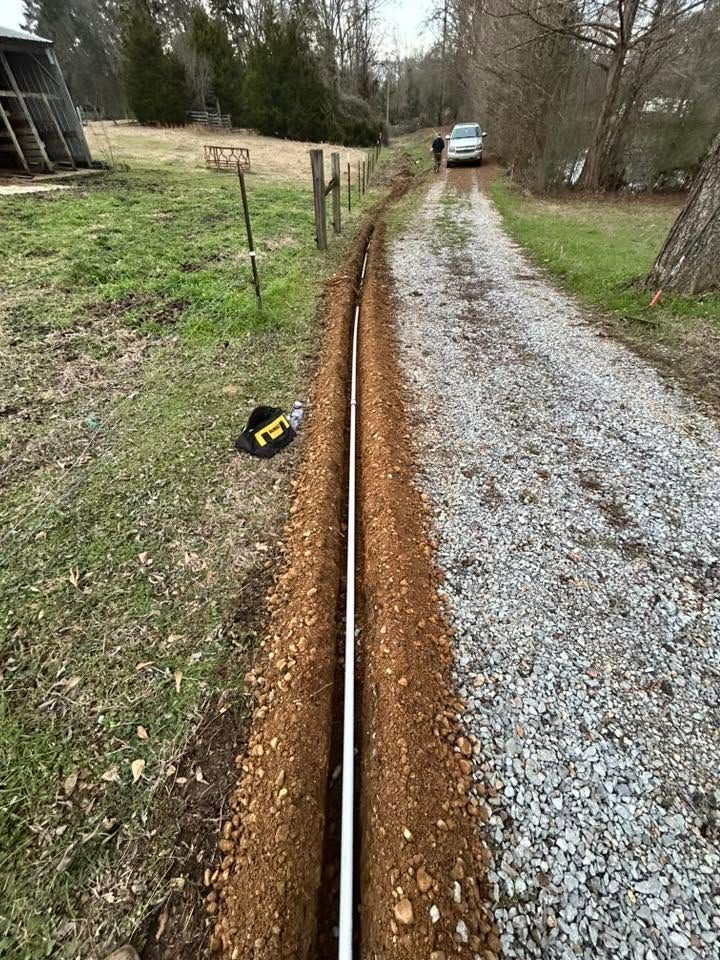
Culvert installation involves evaluating how water moves across the property during storms, determining where flow needs to cross under driveways or roadways, and sizing pipes to handle peak flow without backing up or overtopping. Installation requires excavating to proper depth, bedding the culvert on compacted material, backfilling around the pipe without damaging it, and extending the culvert far enough on both ends that water enters and exits cleanly without eroding soil at the pipe openings. Headwalls or endwalls sometimes get added to prevent soil migration into the pipe and to stabilize embankments where the culvert daylights.
Schedule a drainage assessment to identify where water accumulates and what installation approach your site requires.
Why Proper Installation Prevents Long-Term Problems
Drainage work addresses both immediate flooding and the gradual erosion that weakens driveways and destabilizes slopes over time. Culverts sized too small create bottlenecks where water backs up and overtops the driveway, while undersized pipes flow full during moderate rain and have no capacity left when storms intensify. Installation depth and slope determine whether the culvert drains completely between rain events or holds standing water that accelerates corrosion and attracts sediment buildup.
Once drainage installation is complete, water flows through culverts instead of over driveways, erosion stops at previously damaged areas, and saturated ground near structures begins to dry out between rainfall events. Driveways remain passable during storms rather than flooding, soil stays in place instead of washing into ditches or onto lower areas of the property, and structures no longer sit in persistently wet soil that promotes foundation problems and moisture intrusion. Functional drainage shifts water management from constant maintenance to a system that works without intervention.
Drainage solutions vary based on property slope, soil type, and how much runoff the site receives from uphill areas. Some properties need only a single culvert under a driveway, while others require multiple pipes, ditching to collect and direct flow, or detention areas to slow runoff before it reaches culverts. Site conditions and local rainfall patterns in Brandon determine what combination of measures provides effective long-term water management.
Answers to Drainage and Culvert Questions
Questions about drainage work usually focus on preventing future problems and understanding what the installation includes.
How is culvert size determined for a specific site?
Culvert diameter depends on the drainage area contributing runoff, the property's slope, soil type, and expected rainfall intensity, with calculations ensuring the pipe handles peak flow without overtopping.
What prevents a culvert from clogging over time?
Proper inlet design, adequate slope to maintain flow velocity, and occasional inspection to remove debris buildup all reduce clogging risk, though no culvert is completely maintenance-free.
Why does erosion happen even when culverts are installed?
Erosion at culvert outlets occurs when water exits at high velocity onto unprotected soil, which is why some installations include riprap or outlet protection to dissipate energy and prevent scouring.
When should drainage work happen on a property?
Drainage installation makes sense before erosion undermines driveways or structures, when new construction changes how water flows across the site, or when existing systems no longer handle current runoff volumes.
What's the difference between a culvert and a French drain?
Culverts move surface water under obstacles like driveways, while French drains collect and redirect subsurface water using perforated pipe surrounded by gravel.
Mighty Mule Dump Services LLC designs drainage solutions based on site-specific flow patterns and soil conditions that affect water management. Call (601) 955-7319 to arrange a property evaluation and discuss customized drainage recommendations.