
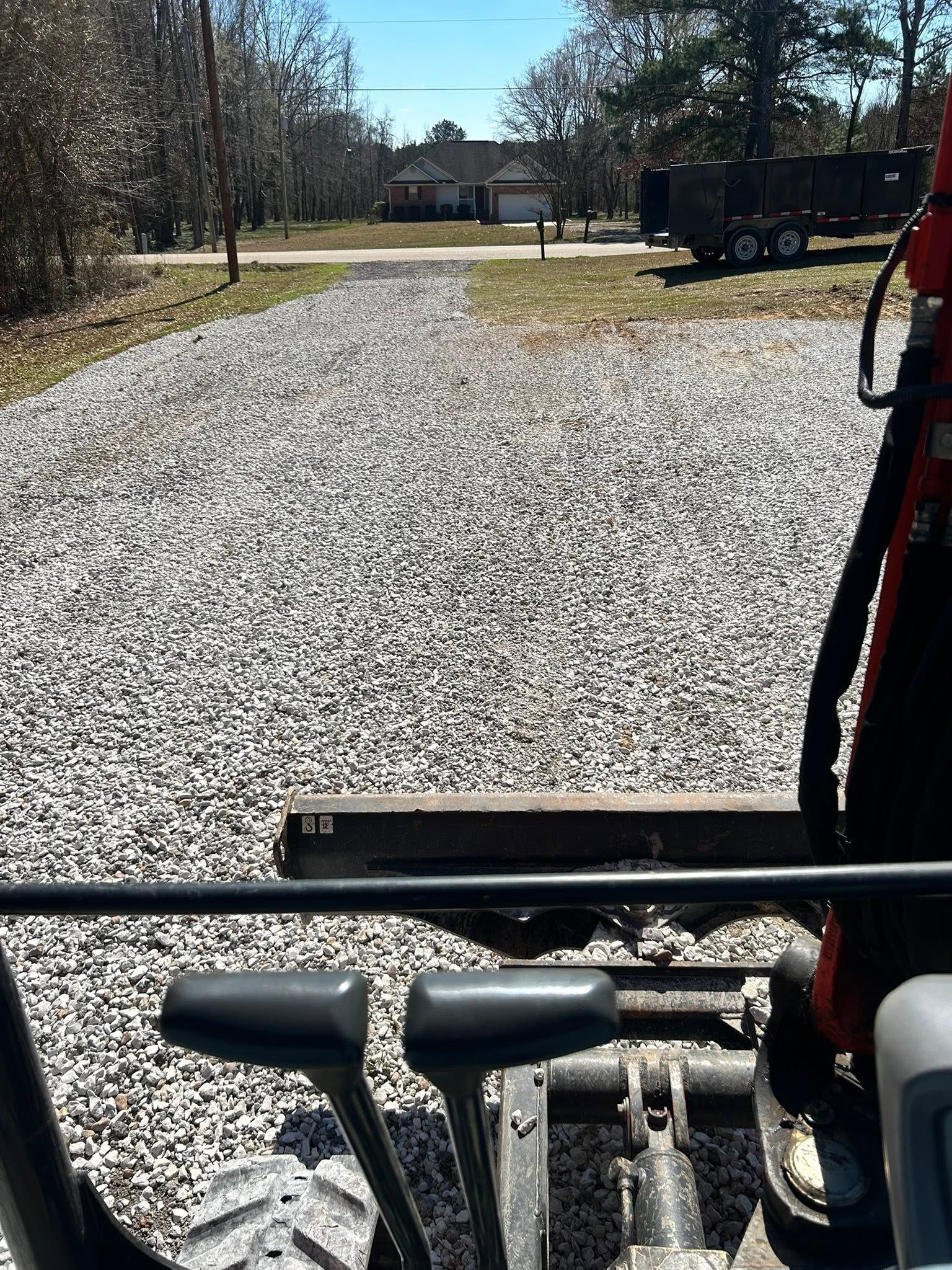
Driveways Built to Handle Daily Use
Gravel Driveway Installation in Brandon for properties needing improved access and long-term surface durability
Mighty Mule Dump Services LLC installs gravel driveways designed to withstand regular vehicle traffic and Mississippi weather conditions. Residential and rural properties throughout Brandon rely on proper driveway construction when paved surfaces aren't practical or when soil conditions and drainage patterns require a more flexible approach. The right base preparation and material selection determine whether a gravel drive lasts three years or thirty.
Gravel driveway installation starts with grading the existing surface to establish proper slope away from structures and toward natural drainage paths. A compacted base layer provides stability and prevents the top gravel from sinking into softer soil underneath, which is particularly important in areas with clay-heavy soil that shifts with moisture changes. Material selection depends on how much traffic the driveway handles and whether it needs to support heavier vehicles like farm equipment or delivery trucks.
Request a driveway estimate to evaluate your property's grading requirements and material options.
What Proper Base Preparation Accomplishes
Base preparation determines how well the driveway resists rutting and washout during heavy rain. The process involves removing organic material that would decompose and create voids, establishing the correct slope for water runoff, and compacting the subgrade before any gravel goes down. Without adequate compaction, vehicle weight pushes gravel into the soil below, creating low spots that collect water and accelerate surface breakdown.
After installation, you'll notice water drains off the surface instead of pooling in tire tracks, vehicles no longer sink into soft spots during wet weather, and the driveway maintains a firm surface that doesn't require constant regrading. The compacted base keeps larger stone in place while allowing smaller aggregate to lock together, creating a stable surface that handles turning and braking forces without displacing material.
Material options range from crushed limestone that compacts tightly for high-traffic residential drives to larger river rock that drains quickly but requires edge containment. The choice depends on your property's slope, soil type, typical vehicle weight, and how much maintenance you're willing to perform over time. Some materials need periodic topdressing to replace fines washed away by rain, while others stay in place but cost more upfront.
What to Know Before Installing a Gravel Driveway
Property owners in Brandon typically ask about material performance and maintenance needs before committing to driveway work.
What type of gravel works best for a driveway?
Crushed stone with angular edges compacts tighter than rounded gravel and resists displacement under braking and turning forces, making it the preferred choice for driveways that handle daily vehicle traffic.
How does grading affect driveway performance?
Proper grading creates a crown or slope that moves water off the surface before it saturates the base, preventing the soft spots and ruts that develop when water sits in the driveway and weakens the subgrade.
When should a gravel driveway be regraded?
Driveways need regrading when potholes form, when the surface no longer sheds water effectively, or when tire ruts become deep enough to scrape vehicle undercarriages during normal use.
Why does base preparation matter more than the gravel itself?
The base supports all the weight and prevents gravel from migrating into underlying soil, so inadequate base work leads to surface failure regardless of how much gravel you add on top.
What factors affect how long a gravel driveway lasts?
Traffic volume, vehicle weight, drainage quality, base compaction, and material type all influence longevity, with properly built driveways in well-drained locations lasting decades before needing reconstruction.
Mighty Mule Dump Services LLC completes driveway projects with attention to grading and drainage details that determine long-term performance. Schedule a property visit to review your site's slope, soil conditions, and access requirements.